

“They [Chinese] would vaccinate our Uygur children and there were widespread incidents of our children dying. By doing this, they wanted to reduce our population. That's why I gave birth to many children as a form of resistance to their plans. When myself and other [Uygur women] fall pregnant, we cannot go out after 4 or 5 months. We could not even go to our parents' house.”
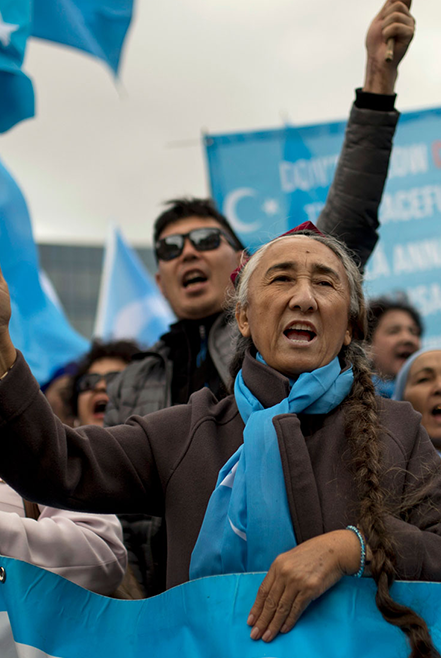
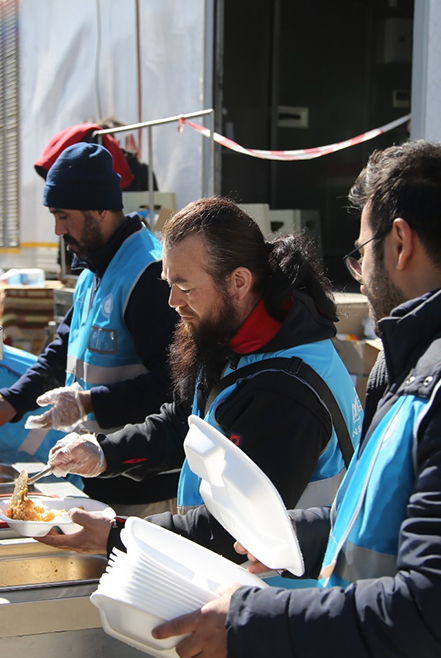
“There are cameras and big doors at the entrance to our streets and homes. You go in and out with a card, all of our movements are automatically updated in the police system. We are under constant control and surveillance, as if we are living in a dungeon. Every neighbourhood is like this. There are sixteen cities in East Turkestan, every city is like this. They began this systematically in 2013, introducing new control systems such as the entry card and others. Cameras would be installed in front of every home.”
“After 2015 the local government began investigating streets and villages. They sent Chinese people to live with you to see if you are fasting. Sometimes they would send a policeman or guard to monitor the streets during Suhūr time, and if they saw that the lights were on they would assume you were fasting, and therefore subject you to punishment. Tarawih prayer is banned, many mosques have already been destroyed or closed, you cannot even pray the five daily prayers. We cannot practice our Ramadan.”
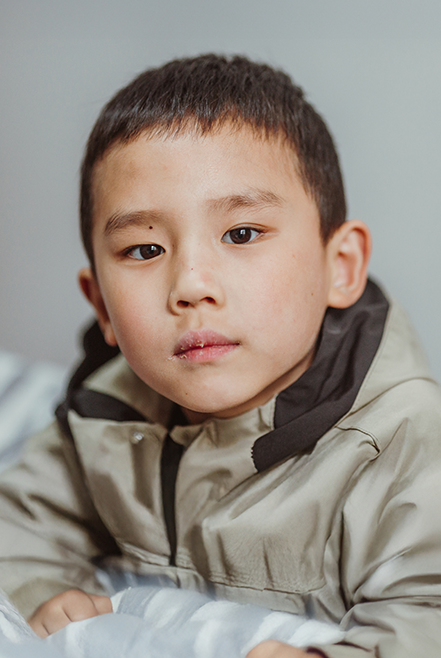
“They (Chinese police) were harassing me a lot, they would enter our home without even knocking the front door. They would jump over the walls (that surrounded the home) and interrogate me. Where is my husband? Does he call you? Do you receive news about him? These were the kind of questions they would ask me.”
“They [Chinese] are very much against Islam. When students who are hardworking become more practising Muslims or even if they decide to wear long skirts, the Chinese authorities would kick them out of school. From 1999 to 2010 there were many university students who, for example, were studying medicine. They would study for seven years. When such students would begin to be more practising Muslims, they were thrown into prison immediately”
“Uyghurs were facing a lot of discrimination in China at this time. I remember that elementary school teachers would visit their students’ homes and get the parents to sign forms promising not to teach them about Islam or how to pray or read the Quran. If the Chinese government found out that the parents were still teaching these things to their children, the parents would be arrested and jailed. In the village where my family and I lived, I remember that a teacher sat outside the mosque and took note of which of his students visited it. Also, during Ramadan, the Chinese government prohibited fasting for anyone under 18 and banned gatherings for prayer. We were always hearing of people getting arrested for violating these rules; it was hard to keep track.”

Nestled in the heart of Central Asia, East Turkestan lies at the center of the vast Turkestan region, spanning over 642,800 square miles, almost four times the size of California. This land, rich in history and natural beauty, borders China, Mongolia, Russia, Kazakhstan, Kyrgyzstan, Tajikistan, Afghanistan, Pakistan, India, and Tibet. Majestic mountain ranges encircle its landscape, sheltering two great basins, the Tarim Basin to the south and the Junggar Basin and Ili Valley to the north.
Beyond its breathtaking terrain, East Turkestan is a land of immense wealth and strategic importance. It produces about 84% of China’s cotton and nearly one-fifth of the world’s supply, its fertile soil sustaining an economy deeply tied to the textile trade. Beneath the surface lie vast reserves of oil, coal, and minerals. According to a 2016 U.S. Congressional report, East Turkestan holds China’s largest proven oil reserves and the second-largest natural gas reserves, producing over 30 billion cubic meters of gas in 2015, a testament to the region’s unparalleled resource abundance.
The Uyghurs have lived in East Turkestan since the sixth century, with Islam becoming central to their identity after Sultan Satuq Bughra Khan embraced the faith in the 10th century. Over time, Islam and Uyghur culture became inseparable, shaping a legacy of resilience and self-determination. The timeline begins with a pivotal chapter in that history, the founding of the First Islamic Republic of East Turkestan in 1933.
On November 12, 1933, the Islamic Republic of East Turkestan was proclaimed in the city of Kashgar, a moment that ignited hope and unity among the Turkic peoples of the region. Led by President Hojaniyaz and Prime Minister Damolla Sabit Abdulbaqi, a 16-member cabinet was formed, and a striking blue flag adorned with a white crescent and star was chosen as the national emblem. From every corner of East Turkestan, Uyghur men and women rallied behind the new republic, donating their gold, silver, and property in a collective spirit of sacrifice and independence.
Yet this brief glimpse of self-determination was swiftly extinguished. On April 13, 1934, joint interference by Chinese and Soviet forces brought the republic to an abrupt end. The roots of this suppression stretched back to the 19th century, when colonial powers had carved Turkestan into spheres of control—the Soviets dominating the west, and the Qing dynasty, later China, claiming the east. Neither power would tolerate an independent Islamic republic supported by the Ottoman Empire, viewing it as a direct challenge to their authority and ambitions in Central Asia.
After the fall of the first republic, the Uyghurs’ resolve only deepened. Their continued resistance led to the founding of the Second Republic of East Turkestan in Ghulja, led by President Elihan Tore and Prime Minister Abdurrauf Mahsum. When Chinese forces attacked from three directions, Uyghur fighters, soldiers, guerrillas, and volunteers battled fiercely in the surrounding mountains, demonstrating remarkable courage and strategy that reclaimed their homeland.
However, after five years, the republic was dissolved through the joint efforts of the Chinese and Soviet governments, as Russia backed China’s occupation to serve its own interests. By 1949, East Turkestan was under full Chinese control once again, but the Uyghur spirit of resistance endured, carrying their struggle for freedom into the decades that followed.
At the Yalta Conference in 1945, world powers drew lines over the fate of nations without ever asking the people who lived there. The United States, Britain, and the Soviet Union signed an agreement declaring that “the civil war in China should end,” a decree that sealed the fate of East Turkestan’s hard-won independence. Behind closed doors, Stalin negotiated with Roosevelt and Churchill: China would recognize Mongolia’s independence, and East Turkestan would be handed over, effectively, to what would become the People’s Republic of China.
In 1949, the Chinese red army invaded and occupied East Turkestan. The decision made at the Yalta Conference, imposed without the consent of the Uyghur people, stands as a stark example of colonial ambition and imperial overreach. What followed was a devastating era: Uyghur lands were seized, Han settlers were forcibly relocated into the region, and generations of Uyghurs faced persecution.
Despite this, the people of East Turkestan remained persistent in their fight for freedom and independence. The Uyghur community continued to organise protests and uprisings to resist China’s violent occupation and persecution.
In the 1950s, China’s “Communization” campaign swept through East Turkestan, bringing devastation under the banner of revolution. Uyghur farmers saw their lands seized and their livelihoods destroyed, while landowners were executed in the name of so-called “rent reduction” and “land reform.” What was presented as progress was, in truth, a campaign of dispossession.
By 1955, Beijing declared a new slogan, “Socialist change against ethnic bourgeois”, a policy that stripped Uyghur entrepreneurs of their businesses and placed them under state control. Three years later, in 1958, the final blow came as Uyghur homes and personal properties were confiscated under the pretext of “socialist transformation.” Behind the rhetoric of equality lay a calculated effort to dismantle Uyghur economic independence and tighten the state’s grip over every aspect of their lives.
In the spring of 1990, courageous Uyghurs resisted Chinese persecution and brutal repression. During the late 1980s, China’s so-called “family planning” policy was violently enforced in East Turkestan, with Uyghur women subjected to forced abortions and the killing of their unborn children. In the village of Barin, Aqtu County, a group of courageous Uyghur youths rose in defiance. Led by Zeydin Yusuf, they demanded an end to these inhumane practices and to the forced resettlement of Han Chinese settlers.
In response, the Chinese regime launched a massive military assault, deploying over 20,000 troops, tanks, Bingtuan (XPCC) artillery, and aircraft against roughly 500 young Uyghur fighters. For five days, the youths of Barin fought valiantly against overwhelming odds. They all became martyrs and their courage became a lasting symbol of the Uyghur struggle for justice and freedom.
IIn the 1990s, China intensified its repression of Uyghur gatherings, including the Meshrep, a cherished tradition where Uyghurs met for cultural, social, and religious enrichment. These gatherings offered hope and unity to Uyghur youth facing unemployment, addiction, and the demoralizing policies of the Chinese regime. But what nurtured the spirit of a people soon became forbidden; China banned Meshrep and even restricted sports activities for Uyghurs.
Amid this growing tension, on February 4, 1997, Chinese police stormed a Ramadan gathering of Uyghur women reflecting on the Qur’an. The women were beaten mercilessly for the simple act of practicing their faith, several lost their lives. The following day, hundreds of Uyghur youths took to the streets of Ghulja in peaceful protest. Chinese forces responded with gunfire and mass arrests, turning the city’s streets red with blood. By July, officials admitted that 17,000 Uyghurs had been detained, many tortured, executed, or condemned to years in prison.
The events that took place on the 5th of July, 2009, marked a critical turning point in the Uyghur’s struggle for freedom and the Chinese regime’s repressive policies in East Turkestan. On the 16th of June, 2009, Uyghur youths who were forcibly transferred to work in a toy factory in Shaoguan city were violently killed and beaten by Chinese workers. The videos were spread online and sparked rage amongst the Uyghur community in East Turkestan.
On the 9th of July, Uyghurs, mostly university students, marched the streets of Urumqi, peacefully demonstrating and demanding the Chinese authorities investigate the incident in Shaoguan city.
The Chinese regime responded violently, they cut off the electricity in the Uyghur populated neighbourhoods in Urumqi and conducted a large-scale “cleansing”.
In the days following July 5, 2009, the Chinese government sent out police and Bingtuan (XPCC) soldiers in plain clothes, disguised as Han civilians to attack Uyghurs and spread fear. Thousands of Uyghurs were arrested or disappeared, leaving many families without answers. Foreign journalists were blocked from reporting, and the internet in East Turkestan was shut down for 10 months to control information.
After the Urumqi Massacre, China intensified its repression in the region, paving the way for what many describe as genocide beginning in 2014. Each year on July 5, Uyghurs worldwide commemorate the victims of the tragedy.
The Yarkand Massacre occurred on July 28, 2014, during Ramadan in the city of Yarkand, following intensified restrictions on Uyghur religious practices. Earlier that month, Chinese authorities detained around 40 Uyghur women for wearing hijabs. When their husbands and sons appealed for their release before Eid, officials ignored them and responded violently.
Around the same time, police raided a private religious gathering, calling it illegal, and killed 15–20 people. These incidents sparked public protests demanding justice and religious freedom. In response, Chinese police and military forces launched a brutal crackdown, killing more than 3,000 unarmed Uyghurs.
To conceal the massacre, authorities sealed off Yarkand, cut internet access, and imposed a long curfew. Despite the risks, a young Uyghur man, Abubekir Rehim, used a VPN to reveal details of the massacre to the outside world. For this act of courage, he was arrested and sentenced to nine years in prison for “leaking state secrets.” The Yarkand Massacre became a grim symbol of the Chinese regime’s escalating repression against Uyghurs, marked by censorship, violence, and the silencing of witnesses seeking to tell the truth about the atrocities committed in their community.
After 2001 the Chinese Communist Party’s (CCP) crackdown on Uyghur Muslims intensified following active lobbying by the CCP to recognise certain Uyghurs as ‘terrorist’ threats. The CCP leveraged off the United States’s ‘Global War on Terror’ (GWOT) narrative by rebranding Uyghur calls for self-determination and independence of East Turkestan as ‘terrorism, separatism and extremism’. This was done in order to justify their violence and suppression of Uyghurs and other ethnic Turkic Muslims in occupied East Turkestan.


